NewsDeepfakesDeepfake abuse
The Law Says Two Hours. She Has Waited Months.
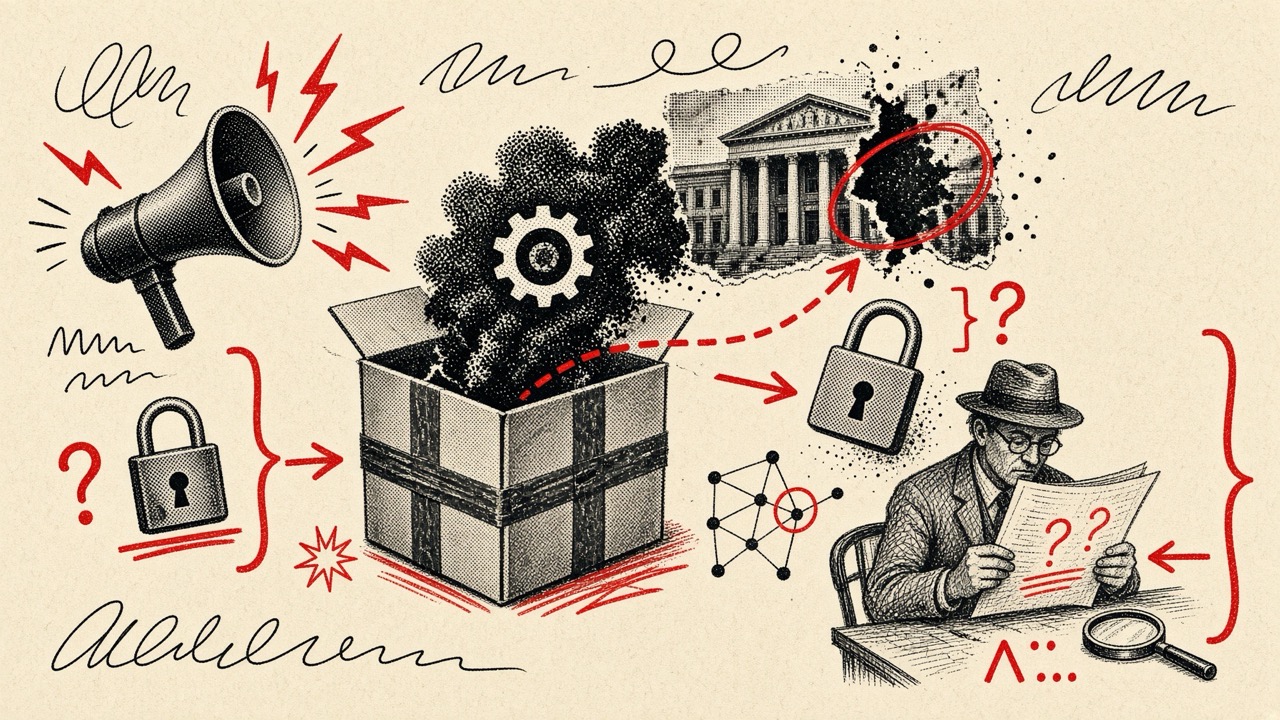
AI tools are turning ordinary photos of women in Indian state of Kerala into fake sexual images, and the takedown system keeps losing the race.
AI-assisted: AI tools were used in preparing this article.
The Law Says Two Hours. She Has Waited Months.
The 30-second version
In the Indian state of Kerala, AI tools are turning women’s ordinary photos into fake sexual images. Kerala’s Ernakulam police logged 93 cybercrimes against women from January to August 2026, up from 2 in all of 2025. Platforms must remove such images within two hours, yet victims wait months. For deepfake removal: save evidence, call 1930, report to the platform and Google.
One morning, her face was somewhere she had never put it
A few months ago, a well-known woman from Kerala found a version of herself she had never seen.
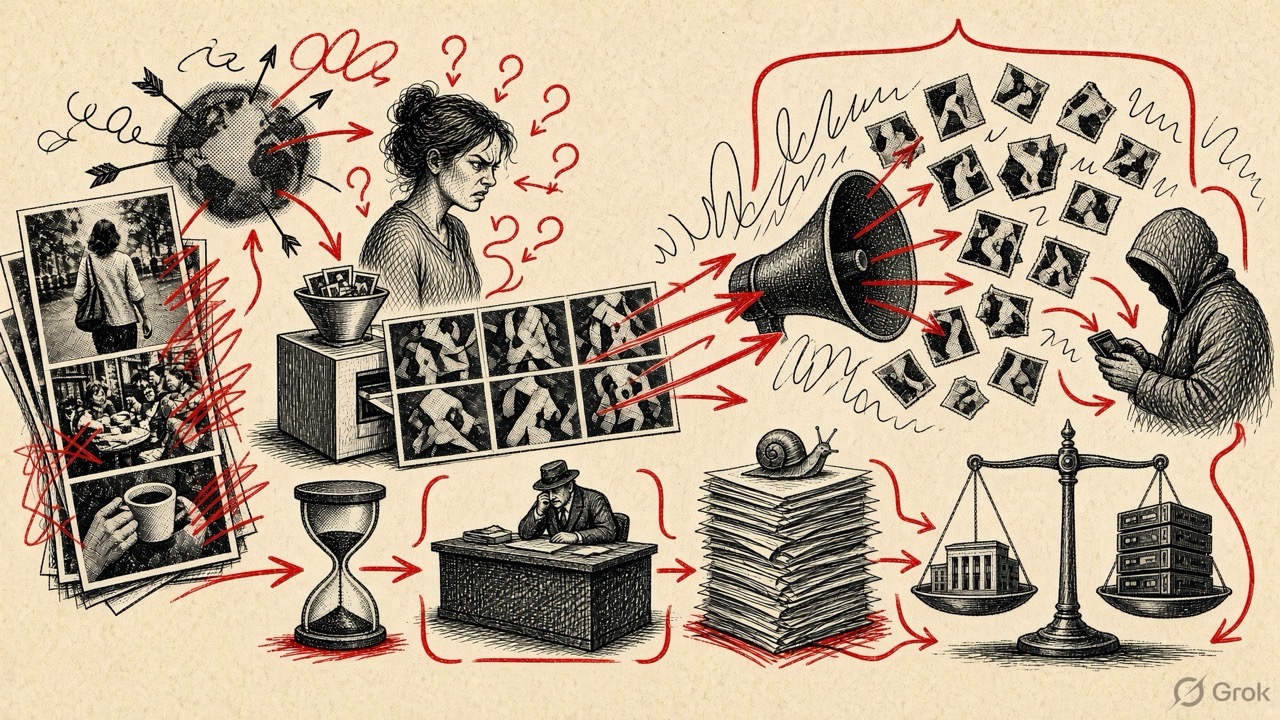
Her face, lifted from her own public photos, had been fitted onto sexual images. They were posted in anonymous Facebook groups. Invented stories carrying her name and identity spread alongside them.
She did exactly what every safety guide recommends. She took screenshots and went to the police.
Officers promised the links would come down, and some did. But each time one post disappeared, fresh ones took its place.
The trail led nowhere. The accounts behind the posts were anonymous, some built on stolen identities. Police then formally asked Meta, which owns Facebook and Instagram, to act. When The New Indian Express reported her case on 25 November 2026, months had passed and nothing had been done.
She is not named here. She does not need to be. What matters is what was done to her, and how long she has been left waiting.
She is one of a fast-growing number
No one has been identified in her case. But Kerala Police figures, as reported by The New Indian Express, show how quickly this kind of abuse is climbing.
| Period | Cybercrimes against women, Ernakulam district | Morphing cases in the same police data |
|---|---|---|
| 2024 | not reported | 66 |
| 2025 | 2 | 94 |
| January to August 2026 | 93 | 96 |
That jump from 2 to 93 is a rise of 4,550 per cent, and the 2026 figure covers only eight months. A “morphing” case means a real photo altered to show something that never happened.
Police offer one partial explanation. More women now report online, through Kerala’s Online Crime against Women and Children (OCWC) portal and the National Cybercrime Reporting Portal. Before these portals caught on, a cyber police officer told the paper, women had to walk into a police station to complain. The most common complaints now, he said, involve blackmail and extortion.
The abuse has reached campuses too. In September 2026, The News Minute reported a string of arrests across Kerala colleges. Kochi police arrested Srihari S, a second-year student at Bharata Mata College, Thrikkakara. Investigators allege he used his place on the student media team to collect photos of classmates and teachers. The photos were then allegedly altered with AI and shared in private Telegram groups.
Ajmal T Muhammad, an engineering student in Ettumanoor, Kottayam, and Abel Augustine, a medical student in Thiruvananthapuram, were also arrested in separate cases. All of them are presumed innocent until proven guilty. Similar complaints reportedly surfaced from about 12 other colleges after September.
How a single photo becomes a weapon
The process is now cheap, fast and almost entirely anonymous.
- A photo is taken. It can come from a public profile, a campus event, a wedding album or a family group shot.
- An AI tool alters it. “Nudify” apps generate a fake nude from a clothed photo. Face-swap tools place a real face on someone else’s body. The result is called a deepfake: AI-made media that looks like a real person.
- The fake is posted. It appears in anonymous Facebook groups, Telegram channels, or fake dating and matrimonial profiles.
- It is turned into money or leverage. Police list blackmail, fake “services” advertised under the victim’s name, and AI-made pornography sold for profit.
- It spreads faster than it can be removed. Every takedown is chased by a re-upload from a new account.
How easy is step two? Kalliopi Mingeirou leads UN Women’s work on ending violence against women. On 17 November 2026, she told Anadolu Agency that a one-minute pornographic deepfake can take under 25 minutes to make. It costs nothing, and needs only one clear photo of a face.
This is not a fringe problem. In January 2026, India’s IT ministry sent a notice to X after users prompted its built-in AI chatbot, Grok, to “undress” photos of women and girls. When a mainstream app can do it on request, the barrier is gone.
Why the law is fast on paper and slow in real life
India’s rules are, on paper, among the toughest anywhere.
Since 20 February 2026, amended IT Rules require platforms to remove intimate, nude, morphed or deepfake sexual images within two hours of a complaint. The old limit was 24 hours. Content flagged by a court or government order must go within three hours, down from 36. A platform that ignores these deadlines can lose “safe harbour”, the legal shield that protects it from being punished for what users post.
So why is a woman still waiting months?
Cybercrime lawyer Jiyas Jamal told The New Indian Express that the system leans on foreign tech companies that “repeatedly fail” to meet the deadline. Cases pass from state police to a national centre, he said, and pile up while the platform’s reply is awaited. By then, the damage has been done.
There is a second gap. Some offenders live or study abroad, which puts them beyond easy reach of Kerala Police.
Human rights lawyer Sandhya J described a case in which a woman went to the police again and again, then to court. Getting a High Court order to delete the posts took two months. By then, the content was everywhere. She also argued that police urgency in high-profile cases rarely reaches ordinary women.
Arrests, police say, are made in some cases. But many of these offences carry station bail, meaning the accused can be released from the police station itself.
The blame belongs to one person
When the college cases broke, some voices online asked what the women had done. One influencer linked the crimes to women dancing at campus celebrations, according to The News Minute.
That question points at the wrong person. The same report notes that perpetrators use family photos and group pictures too. There is no photo, outfit or occasion that makes a woman responsible for someone else choosing to fake her body.
A deepfake has one cause: the person who makes it and the people who share it. UN Women’s Mingeirou put the global picture bluntly: “Online violence against women, particularly in the public sphere, has really reached the tipping point.”
The numbers she cited back that up. Findings she referred to show 98 per cent of deepfake material examined was pornographic, and 99 per cent of the people targeted were women. A 2025 UN Women study surveyed women writers, journalists and rights defenders. Seven in ten had faced online violence, and one in four of them said AI was involved.
How to get an AI deepfake removed in India, step by step
If a fake image of you, or of someone you know, is online, the order of these steps matters.
- Save the evidence first. Take screenshots showing the post, the account name, the web address, and the date and time. Do this before anything is removed. Experts quoted by The Federal on 25 November 2026 give the same advice.
- Report it to the police. Call the national cybercrime helpline 1930, file at cybercrime.gov.in, if you are in Kerala, use Kerala Police’s OCWC portal, or go to the nearest police station. The IT ministry’s November 2025 procedure also lists One Stop Centres, which offer legal and counselling support.
- Report it on the platform, and name the rule. Say the image is non-consensual, morphed or a deepfake. Under the IT Rules amended in February 2026, the platform has two hours to remove it.
- Ask Google to remove it from search results. Google’s policy covers fake and AI-made explicit images shown without consent. In February 2026, Google began rolling out a quicker option in most countries: tap the three dots on an image result, choose “remove result”, and report it as a sexual image of you. Google’s removal form tells people living in India to use a separate India form.
- Block copies with StopNCII.org. This free tool, run by the UK charity SWGfL, creates a digital fingerprint (a “hash”) of the image on your own phone. Only the fingerprint is shared with partner platforms, which then look for copies. It is for adults, and it needs a copy of the image.
Removal from Google hides the image in search, but the website still hosts it. That is why steps 2 and 3 come first.
And if someone sends you such an image, stop it there. Do not forward it, even to “warn” others. Report it, and gently let the woman know, without asking what she did.
The race we are asking women to run alone
India has written a two-hour rule. A woman in Kerala has waited months. The gap between those two facts is where the harm lives.
Every forward, every new account, every slow reply from a platform adds to it. The fix is not for women to disappear from photos. It is for platforms, police and the rest of us to move as fast as the abusers do.
Frequently asked questions
Is making an AI deepfake of someone a crime in India? Yes. Creating or sharing sexual or morphed images of a person without consent is an offence under the Information Technology Act, 2000. The New Indian Express reports that such cybercrimes are cognisable, meaning police can register a case and investigate without a court’s prior approval.
How do I get an AI deepfake removed? Save screenshots of the post first. Then report it on 1930 or cybercrime.gov.in, and report it to the platform, which must remove it within two hours under India’s IT Rules. Ask Google to remove it from search results, and use StopNCII.org to block copies on partner platforms.
How quickly must a platform remove a deepfake of me? Under the IT Rules as amended in February 2026, platforms must remove non-consensual intimate, nude, morphed or deepfake sexual images within two hours of your complaint.
Where do I report AI image abuse in India? Call 1930 or file a complaint at cybercrime.gov.in. In Kerala, you can also use the police OCWC portal or visit any police station.
Sources
- The New Indian Express, Manisha V C S, 25 November 2026, “AI becomes a weapon against women: Kerala struggles to tackle rising online abuse”, https://www.newindianexpress.com/kochi/2026/Nov/25/ai-becomes-a-weapon-against-women-kerala-struggles-to-tackle-rising-online-abuse — the central case, Kerala Police figures, police officer, Jiyas Jamal and Sandhya J comments, types of crime.
- The News Minute, TNM Staff, 8 September 2026, “In Kerala colleges, AI and non-consensual photos emerge as digital harassment threats”, https://www.thenewsminute.com/kerala/in-kerala-colleges-ai-and-non-consensual-photos-emerge-as-digital-harassment-threats — college arrests, about 12 colleges, influencer comments, use of family photos.
- Anadolu Agency, 17 November 2026, interview with Kalliopi Mingeirou, UN Women, https://www.aa.com.tr/en/europe/interview-ai-sexual-deepfakes-drive-online-abuse-of-women-to-tipping-point-un-women-official-warns/4127858 — “tipping point” quote, 98 and 99 per cent figures, 25-minute figure, 2025 UN Women study.
- Business Standard, Aashish Aryan, 10 February 2026, “Govt toughens rules on AI content, mandates 3-hour takedown timeline”, https://business-standard.com/technology/tech-news/it-ministry-shortens-takedown-timelines-intermediaries-ai-content-rules-126021001625_1.html — two-hour and three-hour deadlines, in force 20 February 2026.
- Bar & Bench, 2026, “Centre amends IT Rules to regulate AI-generated content”, https://www.barandbench.com/amp/story/news/law-policy/centre-amends-it-rules-to-regulate-ai-generated-content-takedown-timelines-reduced — notification date 10 February 2026.
- LiveLaw, 3 January 2026, “Union Govt Writes To X Corp Over Alleged Misuse Of ‘Grok’ AI”, https://www.livelaw.in/amp/top-stories/union-govt-writes-to-x-corp-over-alleged-misuse-of-grok-ai-to-generate-obscene-content-seeks-action-taken-report-within-3-days-516802 — MeitY notice to X, safe harbour warning.
- SCC Online, 12 November 2025, “MeitY introduces SOP mandating 24-hour deadline for takedown of NCII”, https://www.scconline.com/blog/post/2025/11/12/meity-non-consensual-intimate-imagery-sop-24-hour-takedown-policy-scctimes/ — reporting channels including 1930 and police.
- Press Information Bureau via NeGD, 11 November 2025, “MeitY Issues Standard Operating Procedure to Curtail Dissemination of NCII Content”, https://negd.gov.in/wp-content/uploads/2025/11/Press-Release_Press-Information-Bureau2-1.pdf — primary source for the NCII procedure.
- Google Search Help, “Remove explicit non-consensual fake imagery from Google”, https://support.google.com/websearch/answer/9116649 — eligibility for removing fake explicit images.
- Google Search content removal form, https://support.google.com/websearch/contact/content_removal_form — note that residents of India must use a country-specific form.
- Google Account Help, “Ask Google to remove explicit or intimate content”, https://support.google.com/accounts/answer/17045517 — Google’s policy includes AI-generated and synthetic imagery.
- Google blog, Phoebe Wong, 10 February 2026, “A simpler way to remove explicit images from Search”, https://blog.google/products-and-platforms/products/search/remove-explicit-images/ — three-dot “remove result” flow.
- StopNCII.org, “How it works” and FAQ, https://stopncii.org/ — on-device hashing, adult-only, covers manipulated images.
- The Federal, 25 November 2026, “Why activism against gender-based violence needs to demand action against online perpetrators”, https://thefederal.com/category/the-eighth-column/un-united-nations-gender-based-violence-activism-online-abuse-deepfakes-pornography-doxxing-cyberstalking-cyber-crime-abuse-digital-sexual-violence-harassment-264022 — advice to preserve evidence before removal.