NewsPolicyai detector,pangram,author accused of using ai
Guilty Until Proven Human: Inside the AI Detector Witch Hunt Hitting Writers
A romance novel lost deals in three countries on one detector's say-so. It is the latest in a run of AI accusations that are hard to prove and almost impossible to disprove.
AI-assisted: AI tools were used in preparing this article.
The 30-second version
In November 2026, debut novelist Kathryn O’Connor Mertens had her novel withdrawn after a UK publisher’s AI detector, Pangram, flagged it. She denies using AI. Detectors like Pangram test well, but at scale even rare errors wrongly accuse real writers. Keep your drafts, and insist that any accusation starts with a conversation, not a score.
A romance novel, three countries, one score
Picture the best week of a debut author’s life. Your agent has sent your novel out on submission, meaning to publishers who might buy it. A German publisher makes a pre-empt, an early offer to buy before anyone else can bid. Holland and Italy want it too.
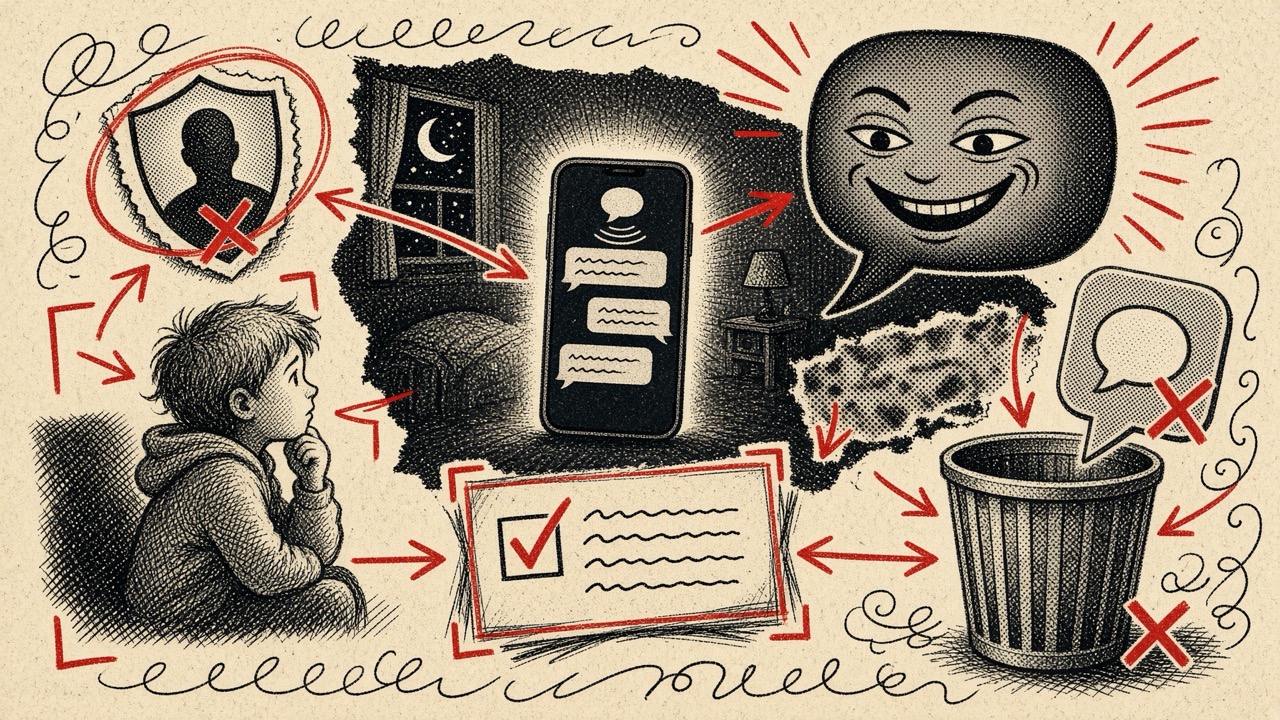
Then one email ends it. A publisher in London has run your manuscript through an AI detector. The detector thinks it “might be AI-generated.”
That is roughly what Publishers Lunch reported about Kathryn O’Connor Mertens on 25 November 2026. Her novel, Wild Horse Country, is a romance set at a horse rescue centre. The deals included a two-book pre-empt from Ullstein in Germany, plus offers from Holland and Italy, according to UK scouts quoted in the report.
Her agent withdrew the book. The question nobody can answer is the one that matters: did a human write it?
What happened to Wild Horse Country
Here is what is on the record.
Sara O’Keefe, an agent at Andrew Nurnberg Associates, withdrew Wild Horse Country from submission after an unnamed UK publisher ran it through Pangram, Publishers Lunch reported. The trade site said the publisher was “reportedly Cornerstone.” The public excerpt gives no detector score.
According to the agent’s email to colleagues, as it has circulated online, Mertens supplied 11 drafts and a notebook of character notes and plot plans. Even so, the email says, a significant question mark now hangs over the novel. That email has not been published in full.
On 25 November, Mertens posted a statement. She says she wrote the book herself “this year over several months.” She says she has drafts, handwritten notes and research to prove it, and offers to share them with “any industry professionals or independent researchers.” She is taking advice and declined to comment further.
No one has published evidence that she used AI. She should be treated as what she is: a writer facing an unproven accusation.
She is not the first author accused of using AI
2026 has been the year publishing started pulling books over AI fears. Some accusations held up. Others are still unresolved.
| Writer and work | What raised the alarm | What happened next |
|---|---|---|
| Mia Ballard, Shy Girl (Hachette) | A New York Times report, after reader suspicion | Hachette cancelled the book in March. Ballard denied writing it with AI but said an editor might have used it |
| Jerry Falade, debut crime novel | An editor in a 14-publisher auction | Agents withdrew it; a two-book deal reported at about $2.5 million collapsed |
| H.M. Wolfe, Daggermouth (Simon & Schuster) | Academics’ study of Kindle books; Pangram estimated 60% AI text | Wolfe denies it; Simon & Schuster stands by the book |
| Thélyson Orélien, It Was That or Die | An anonymous account using Pangram | Removed from the Prix Goncourt longlist; his publisher later said early drafts showed AI use |
| Simbarashe Steyn Kundizeza, Caine Prize story | Pangram flagged almost the whole story | He says it is “entirely my work” |
Read the last column carefully. In Orélien’s case, according to Jane Friedman’s industry tracker, the publisher found evidence in early drafts. In Wolfe’s and Kundizeza’s, the writers deny it and nothing has been proven. A detector score started every one of these fights. It settled none of them.
Schools ran this experiment first, and it went badly
Before publishers, classrooms tried using detectors to catch AI. The results are a warning.
At Australian Catholic University, nearly 6,000 academic misconduct cases were logged in 2024, about 90% involving suspected AI, ABC News reported in October 2025. The university leaned on Turnitin’s AI detector, even though Turnitin itself warned the tool “may not always be accurate.” Students said they had to prove their own innocence. ACU stopped using the indicator in March 2025.
In New York, Adelphi University student Orion Newby was accused of using AI after a detector flagged his history essay. His family sued, and he won. “It feels incredible to finally have my name cleared,” he told Newsday. His family reportedly spent more than $100,000 on legal costs.
The bias problem is older still. In 2023, Stanford researchers found that seven detectors, on average, labelled 61% of essays by non-native English speakers as AI-generated, while scoring US-born eighth-graders almost perfectly. Stanford’s James Zou called the detectors “unreliable and easily gamed.” For readers in India, where many people write in English as a second language, that finding should sting.
Even OpenAI, the maker of ChatGPT, gave up on its own detector. It shut it down in July 2023, citing its “low rate of accuracy.”
Isn’t Pangram supposed to be accurate?
Here is the uncomfortable part: Pangram is genuinely good. That is what makes this hard.
In a 2025 University of Chicago study, Pangram was the only detector to meet a strict cap of wrongly flagging human text no more than 0.5% of the time, while still catching AI text. Its false positive rate, the share of human writing wrongly labelled AI, was close to zero for medium and long passages. An independent test by research group Epoch AI found that only Originality.ai, not Pangram, mistook human writing for AI. Pangram says its tool wrongly flags human writing in about 1 in 10,000 cases.
So why do writers keep getting flagged? Three reasons.
- Rare is not never. Publishing screens enormous volumes of manuscripts. Even a 1-in-10,000 error rate means some innocent writers will be flagged, every year, by arithmetic alone.
- Lab results are not your manuscript. Benchmarks use set collections of text. Some external studies have recorded false positive rates between 0.48% and 2%, Crypto Briefing reported, and the open question is how controlled tests translate to messy real-world writing.
- Detectors catch the wrong people. A 2026 study from the University of Notre Dame, not yet peer reviewed, found Pangram flagged 64–80% of text that had only been lightly edited with AI. After “humanizer” tools rewrote AI text, more than 96% of it slipped past Pangram and GPTZero.
Read that third point twice. A writer who ran a chapter through an AI grammar tool can be flagged. A cheat who disguises a fully AI-written book can walk through. The tool can be right that AI touched a text and still be wrong about who wrote the book.
The proof trap: why “save everything” is no longer enough
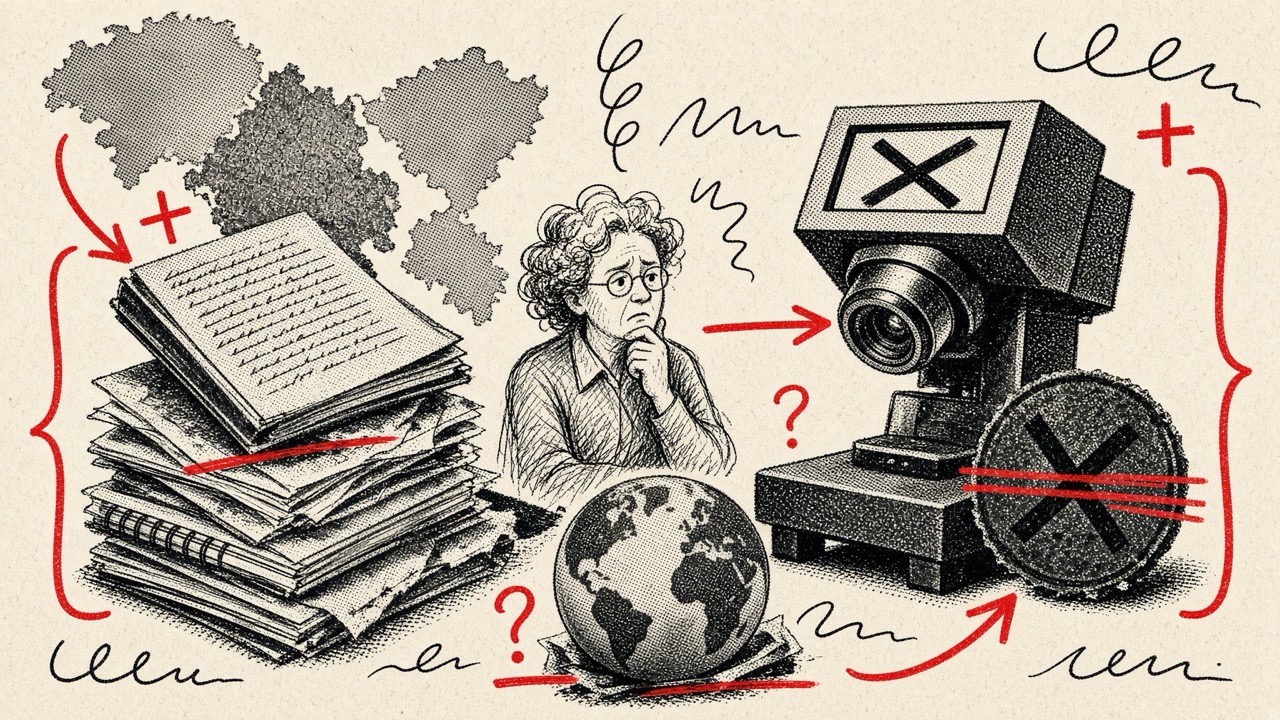
Writers have been told to save everything: drafts, notes, version history. Mertens says she has all of it. It did not stop the withdrawal.
The problem is that evidence of humanity is easy to fake and hard to check. Drafts can be generated. Notes can be written after the fact. Jane Friedman’s guide for writers is blunt: process records may help, but no publisher or agent reviews them systematically, and they prove little on their own.
That flips the oldest rule of fairness. The writer must prove a negative, that no machine was involved, to a reviewer who has not said what would count as proof.
The Authors Guild, the US writers’ organisation, says this should never happen. Its October 2026 guidance says publishers should not require authors to prove they wrote their books, and that “No publisher, agent, or other person should rely solely on an AI detector.” Flagged work, it says, should start a frank conversation with the author.
Why publishers reach for the detector anyway
Publishers are not villains here. They are frightened, and with reason.
In 2025, readers found leftover chatbot prompts printed inside romance novels by self-published authors, including one asking the AI to copy another writer’s style. Those books really were AI-assisted. Every editor now fears being the one who paid for a machine-written book.
A detector offers something editors badly want: a number. A number feels objective, defensible, impersonal. It moves the decision from a person, who might be wrong, to software, which seems neutral.
That is exactly the danger. The Authors Guild warns that flags on non-native English writing, genre-conventional prose and plain prose should be treated as weak evidence. Romance, with its familiar beats and phrasing, is precisely the kind of genre-conventional writing a pattern-matcher may misread.
How writers, students and editors can protect themselves
- Writers: ask before you sign. Ask your agent and publisher for their AI policy, and whether they run manuscripts through detectors. The Authors Guild says publishers should be “fully transparent about when and why they use AI detectors.”
- Writers: keep your trail anyway. Use tools that save version history, and keep notes and research. It is not proof, but the Authors Guild supports writers who preserve drafts in case they are accused.
- Writers: disclose any AI help. If an AI tool touched your text, even for editing, say so in writing. The Notre Dame study shows light AI edits can trigger flags.
- Writers: don’t twist your style to dodge detectors. Jane Friedman advises against stripping out em dashes or other “AI tells”; it rarely changes a book-length result and adds stress.
- Editors and teachers: never act on a score alone. Turnitin warns its indicator should not be the sole basis for action against a student, and the Authors Guild says the same for books. Talk to the writer first. Writers on Reddit’s r/PubTips have proposed a consent-first rule: ask permission before uploading someone’s manuscript to a third-party detector.
Questions people are asking
Can an AI detector prove someone used AI? No. It gives an estimate based on writing patterns. Even the most accurate tools can misfire, and the Authors Guild says no one should rely on one alone.
Is Pangram accurate? In independent tests it is the strongest detector available, with very low false positive rates. But it flags lightly AI-edited human text, and well-disguised AI text can evade it.
What should I do if I’m accused of using AI? Ask to see the score and the passages flagged. Offer your drafts and notes, request a conversation, and, if you are a student, ask for your institution’s appeal process in writing.
The uncomfortable truth
We built machines that write like us, then machines that guess whether we wrote. The second kind is getting very good. It is still guessing.
Until publishers and schools treat a detector score as the start of a question, not the end of one, every writer is one flag away from proving the impossible. Say it plainly: a score is not a verdict.
Related reading: ₹100 Crore Panchayat Cyber Fraud: India’s First AI Agent Heist, or a Convenient Alibi? · AI Scams: How They Work and How to Protect Yourself · Your AI Chat Doesn’t Stay Where You Typed It
Sources used
| Source | Date | Supports |
|---|---|---|
| Publishers Lunch, Erin Somers, “Agent Pulls Romance Novel From Submission Over Suspected AI Use” — https://lunch.publishersmarketplace.com/2026/11/agent-pulls-romance-novel-from-submission-over-suspected-ai-use/ (public excerpt only; full story behind login) | 25 Nov 2026, modified 27 Nov | Agent, agency, Pangram, “reportedly Cornerstone”, Ullstein pre-empt, Holland and Italy offers |
| Kathryn O’Connor Mertens, author statement — https://www.kathrynoconnormertens.com/ | 25 Nov 2026 | Denial, “this year over several months”, drafts, notes, offer to share |
| The Bookseller, Melina Spanoudi — https://www.thebookseller.com/news/author-denies-allegations-she-used-ai-to-write-book-after-novel-dropped-by-agent (paywalled) | 26 Nov 2026 | Denial covered by UK trade press |
| Reddit r/PubTips post (text supplied by the author; Reddit blocked to the reader) and baillie.ai news, 27 Nov 2026 — https://baillie.ai/news/2026-11-27/debut-novelist-denies-using-ai-after-one-detectors-flag-cost-her-her-agent-and | 26–27 Nov 2026 | “11 drafts and a notebook” from the agent’s email; consent-first proposal |
| Jane Friedman, “AI and Publishing: FAQ for Writers” — https://janefriedman.com/ai-and-publishing-faq-for-writers/ | updated Nov 2026 | Shy Girl, Daggermouth (Pangram 60%), Falade ($2.5m), Orélien (drafts), advice on process records and style |
| CBC News — https://www.cbc.ca/news/business/publishing-industry-ai-shy-girl-fallout-9.7155292 | 2026 | Shy Girl, NYT report, Ballard’s denial |
| The Bookseller (Orélien), 23 Sep 2026; Entrepreneur, 28 Sep 2026 — https://www.entrepreneur.com/business-news/a-detector-said-he-used-ai-to-write-100-percent-of-his-award-winning-novel | Sep 2026 | Orélien accusation, Goncourt removal |
| The Week, “Pangram: Can we trust AI detectors?” — https://theweek.com/tech/pangram-can-we-trust-ai-detectors | 2026 | Kundizeza, Caine Prize, “entirely my work” |
| Authors Guild, “AI Best Practices for Publishers” — https://authorsguild.org/resource/ai-best-practices-for-publishers/ | 13 Oct 2026 | Sole-reliance quote, transparency quote, consult author, weak-evidence categories, no proof burden |
| ABC News via RNZ — https://www.rnz.co.nz/news/world/575416/university-wrongly-accuses-students-of-using-artificial-intelligence-to-cheat ; WDEF/ABC summary | 9 Oct 2025 | ACU 6,000 cases, 90%, Turnitin warning |
| DEV/ABC reporting on ACU stopping the indicator — https://dev.to/rawveg/a-number-is-not-evidence-4p3o | 2025 | ACU stopped March 2025 |
| EdScoop / Newsday (Orion Newby) — https://edscoop.com/adelphi-university-student-ai-lawsuit/ ; ABC7 NY | 2026 | Adelphi case, win, quote, $100,000 |
| Stanford HAI — https://hai.stanford.edu/news/ai-detectors-biased-against-non-native-english-writers | 15 May 2023 | 61% TOEFL, Zou quote |
| The Register / OpenAI statement — https://www.theregister.com/2023/07/26/openai_ai_classifier/ | 20–26 Jul 2023 | OpenAI classifier shut down, “low rate of accuracy” |
| University of Chicago BFI, Jabarian and Imas — https://bfi.uchicago.edu/wp-content/uploads/2025/09/BFI_WP_2025-116.pdf ; Chicago Booth Review | Sep–Dec 2025 | Pangram only detector meeting FPR ≤ 0.5% |
| Epoch AI — https://epoch.ai/data-insights/ai-text-detection-challenges | 2026 | Only Originality.ai misflagged human text |
| CASRAI Pangram review — https://www.casrai.org/guides/pangram | Aug 2026 | Pangram’s 1-in-10,000 claim |
| Crypto Briefing — https://cryptobriefing.com/pangram-ai-content-detection-accuracy/ | 2026 | External FPR 0.48%–2% (weak source) |
| Notre Dame, “Why AI Detection Fails for Academic Integrity” — https://arxiv.org/pdf/2608.11256 (preprint; used Pangram’s API) | 2026 | Light edits flagged 64–80%; >96% humanized evade |
| 404 Media; Fast Company; Daily Dot | May 2025 | AI prompts left in romance novels |
Key terms in this article
- Pangram
- A commercial AI detector used by some publishers, schools and conferences, which reports how much of a text it thinks is AI-generated.
- False Positive
- When a detector wrongly labels human writing as AI-generated.