NewsScamsGTA VI
That "GTA VI for PC" Client Is a Heist. You're the Bank.
It plays the trailer, loads a slick menu and quietly takes your game, crypto and AI accounts. Here's why the AI keys matter most.
AI-assisted: AI tools were used in preparing this article.
The Fake GTA VI PC Client Wants Your Steam Login. It’s Also After Your AI Keys.
TL;DR
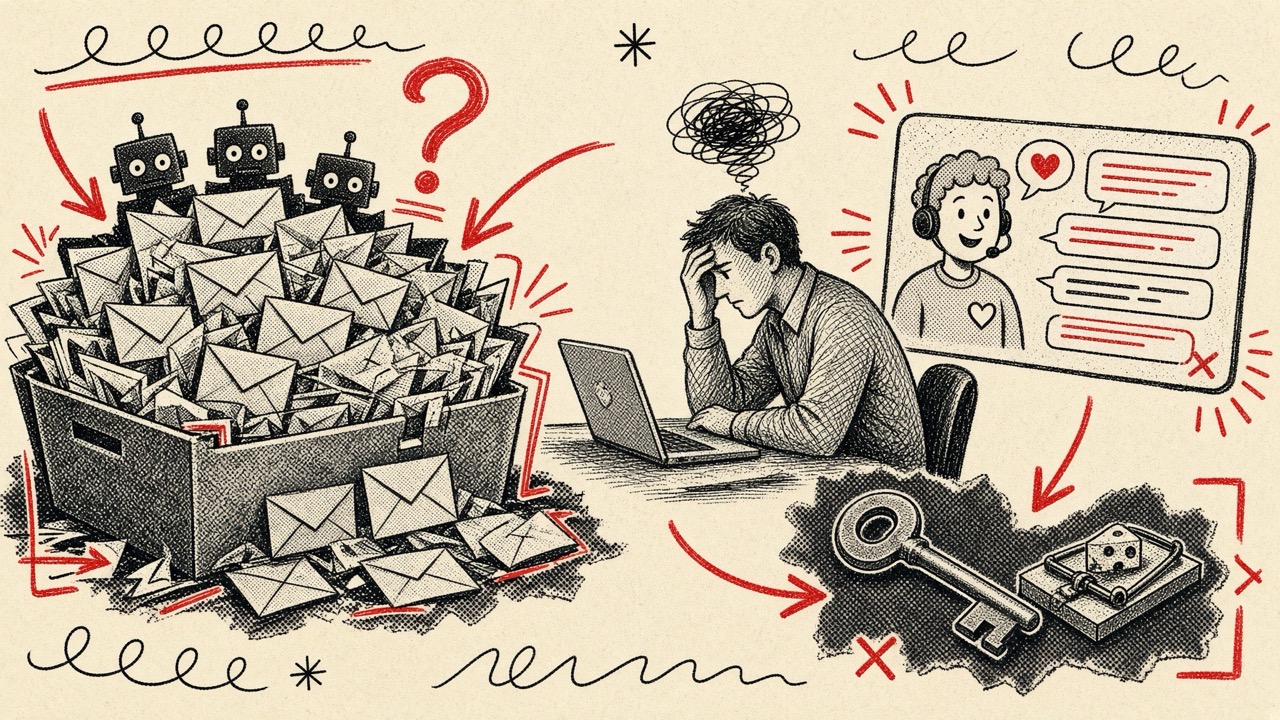
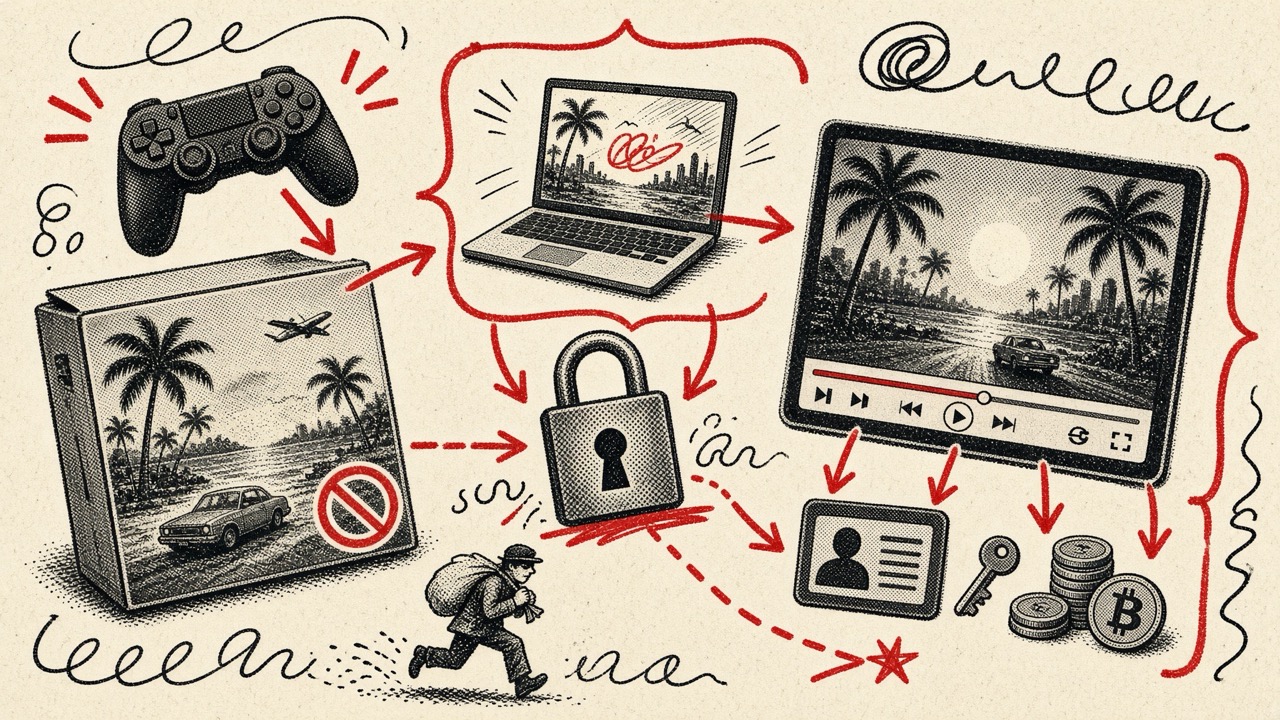
GTA VI is out on PS5 and Xbox, but there’s no PC version. A fake “GTA VI cloud client” promises to stream it to your PC. Instead, it installs an infostealer, malware built to grab logins, and that stealer goes after your AI accounts and AI API keys as well as Steam and Discord. Stolen AI keys are now a criminal business that has left some victims with bills near $1 million. If you ran the client, change your passwords from another device and revoke your AI keys.
The PC master race got left on read
November 19 finally came. After two delays and more than a decade of waiting, GTA VI launched on PS5 and Xbox Series X|S.
And PC players got nothing. Rockstar still hasn’t announced a PC date, and going by its own track record, the wait could be long. GTA V took about 19 months to reach PC, and Red Dead Redemption 2 about 13.
So picture it. Your group chat is full of clips of Lucia and Jason. You’re stuck on a gaming rig that can’t run the one game everyone’s playing. Then you find a site called gta6cloud.nexus.
It promises exactly what you want: a “GTA VI cloud client” that streams the game from an Xbox or PlayStation onto your Windows PC. It even says it isn’t affiliated with Rockstar or Take-Two, which somehow makes it feel more honest.
You download it. It plays the trailer. A slick GTA-themed menu loads.
Behind that menu, your accounts are already being cleaned out.
What the fake client really does
Security firm Bitdefender uncovered the scam and published its analysis on November 20, 2026. Hackread reported it the next day.
The site offers two ways in. One is a ZIP file containing GTA6Cloud.exe. The other is a “quick install”: press Win+R, paste a command and hit Enter.
That second option is a trick called ClickFix. Instead of hiding malware in a download, ClickFix gets you to run the attacker’s command yourself. The pasted PowerShell command, a line of instructions for Windows, quietly downloads and runs a script without showing you what’s in it.
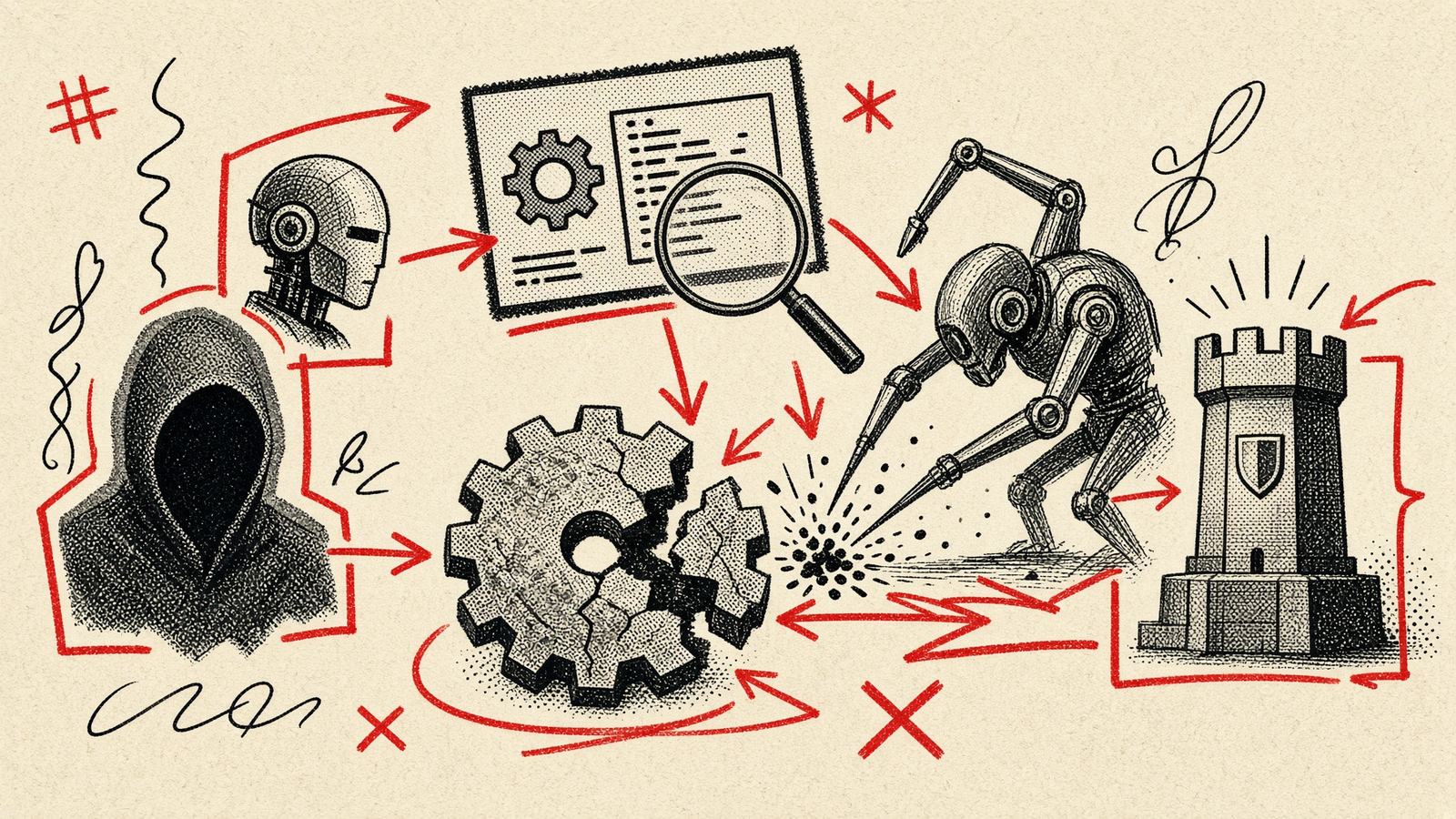
Either way, here’s the heist in four moves:
- The client launches and plays the trailer, so everything looks legit.
- In the background, it downloads two more files and hides them in a folder you won’t spot.
- A genuine Windows tool is tricked into loading the malicious file. This is called DLL sideloading: a trusted program runs the bad code for the attacker.
- That code slips an infostealer into normal Windows processes, then phones home to the attackers’ server. It also sets itself to restart every time Windows boots.
What it takes, according to Bitdefender:
- Steam and Discord data, which can mean a way into your accounts, inventory and servers
- Browser passwords, cookies and login tokens from Chrome, Edge, Firefox and other browsers
- Crypto wallets
- AI and developer accounts, including API keys, the secret codes apps use to log in
- Your clipboard and screenshots of whatever is on screen
The cookies are the nasty part. A stolen session cookie can let someone walk straight into your account without your password. As Malwarebytes warned about an earlier GTA scam, that can mean even two-factor authentication may not stop them.
The loot you didn’t know you had: your AI accounts
Most gamers would worry about Steam first. The AI loot can cost you far more.
Think about where your AI logins live now. Your ChatGPT, Claude or Gemini session sits in your browser. If you run a Discord bot, a mod tool or a side project that calls an AI model, its API key is probably saved on your PC. An infostealer that grabs browser cookies and API keys gets all of it.
That matters for two reasons.
1. Someone else runs up the bill. Stolen AI keys have become a business with a name: LLMjacking, the use of stolen credentials to run paid AI models at the victim’s expense. In a report published on November 2, 2026, Google’s threat intelligence team and Mandiant described fraudulent charges of more than $100,000 in a single day. In some cases, bills reached $1 million before the attackers were cut off, Help Net Security reported.
The keys are then resold. One reseller service, Jet Night, offers “unlimited” access to top AI models for about $60 a month, against $100 to $250 for a comparable legitimate plan. Google believes it can only make money using stolen keys. In one case, a stolen key made more than 500,000 AI requests in under eight hours, leaving the victim with nearly $1 million in charges.
2. Your chats become someone else’s reading. A stolen AI account opens your whole chat history: the code you pasted, the personal problems you talked through, the work files you uploaded. That isn’t a new worry. Group-IB found 101,134 stolen ChatGPT logins in infostealer logs between June 2022 and May 2023, and India alone accounted for 12,632 of them, The Hacker News reported. OpenAI said the leak came from malware on users’ own devices, not a breach of its systems.
Bitdefender hasn’t reported what this particular campaign did with the AI keys it stole. But the stealer was built to collect them, and they’re now among the things it hunts for.
Why this one almost makes sense
The best lies stick close to the truth, and this one does.
Streaming a console game to a PC is a real thing. Sony and Microsoft both have official remote-play apps that do it. So “stream GTA VI from your console to your PC” doesn’t sound crazy. It sounds like a setting you hadn’t found yet.
The difference is who makes the app. Real remote play comes from Sony or Microsoft. It doesn’t come from a .nexus domain that tells you to paste commands into Windows.
Bitdefender’s researchers didn’t treat this as clever. “This is a ClickFix attack like countless others before it,” they wrote. The GTA branding is just the skin.
And GTA VI has been wearing a lot of bad skins this year:
| When | The bait | What was really inside |
|---|---|---|
| Nov 2026 | “GTA VI cloud client” for PC | Rust infostealer (Bitdefender) |
| Aug 2026 | Fake Rockstar sites with a “Play Now” demo button | Password-stealing malware (Malwarebytes) |
| Aug 2026 | A “leaked” 113GB playable build | Almost entirely empty data hiding a tiny malware payload (Security Affairs) |
| 2026 | A supposedly leaked copy of the game | Several malware components bundled together, found by Huntress (Help Net Security) |
The pattern is simple. Every trailer, leak and launch date sends fans hunting for anything extra, and scammers set up shop exactly where that hunt leads. The PC gap is the biggest opening yet, because a huge number of players want something that doesn’t officially exist.
Patch notes for your brain
You don’t need to be a security expert. You just need a few rules, like knowing not to trust a stranger offering a “free” car in Vice City.
Rule 1: If it doesn’t exist, you can’t download it. There’s no official GTA VI for PC yet, and no official beta or demo. Any “PC client,” “early access build” or “leak” is bait. Check Rockstar’s own site before you believe anything.
Rule 2: Never paste a command a website gives you. No real game, launcher or captcha needs you to open Win+R or PowerShell and paste text. If a page tells you to, close the tab. Bitdefender says the same goes for any instruction to bypass a security setting or switch off your antivirus.
Rule 3: Judge the source, not the skin. The trailer, the logo and the “not affiliated with Rockstar” line are all free to copy. What matters is who’s actually giving you the file: Steam, Epic, Sony, Microsoft or Rockstar, or some random domain?
Already ran it? Do this now
Bitdefender’s advice is blunt: if you ran it, assume your PC is compromised.
- Disconnect the PC from the internet.
- Scan it with trusted security software. If anything was found, think about a full Windows reset.
- From a different device, change your passwords, starting with your email, then Steam, Discord and anything holding money.
- Sign out of all sessions on Steam, Discord, Google and other key accounts. This kills stolen cookies.
- Check your crypto wallets and move funds to a new wallet if you can. Then log in to every AI service you use, sign out of all sessions, and delete and replace any API keys that were saved on that PC.
Tell your Discord server too. Stolen Discord accounts are often used to send the same scam link to friends, who trust it because it came from you.
If you use AI keys at all, set a spending cap today, whether or not you ran the client. Many AI platforms let you set a monthly limit and a billing alert. If a key leaks, the cap decides whether you lose a few dollars or thousands. Mandiant’s advice to companies starts in the same place: watch for changes to your AI accounts, because attackers have used stolen keys to switch disabled AI services back on.
For the curious, the known red flags: domains gta6cloud.nexus and velmontriq.net; files GTA6Cloud.exe, loadperf.dll, unlodctr.exe in a hidden folder, and PhotoCache.exe, as listed by Hackread.
Wait for the real drop
The PC version will come. GTA V and Red Dead Redemption 2 both reached PC in the end, and when GTA VI arrives, it’ll be on the stores you already use.
Until then, anyone offering it early isn’t doing you a favour. They’re running a heist, and your accounts are the vault. In 2026, that vault holds more than your game library. It holds your AI accounts too.
Related reading: Your Boss Just Called. It Wasn’t Your Boss.
Ajith M S : Full-time reader, part-time writer, interested in AI and its societal impact. x.com/ajithms · Last reviewed: November 2026
Sources
-
Bitdefender Labs, Janos Gergo Szeles and Silviu Stahie, Nov 20, 2026: discovery, infection chain, data stolen, persistence, quote, advice
-
Hackread, Deeba Ahmed, Nov 21, 2026: scam overview, domains and file names
-
PCWorld, Feb 4, 2026, and Dot Esports: Nov 19 console launch, no PC date, two delays
-
The Games Wiki: GTA V and Red Dead Redemption 2 console-to-PC gaps
-
Malwarebytes, Aug 24, 2026: fake demo sites; stolen sessions can bypass 2FA
-
Security Affairs, Pierluigi Paganini, Aug 24, 2026: fake 113GB build
-
Help Net Security, 2026: Huntress analysis of a fake leaked copy
-
Google Threat Intelligence Group and Mandiant, Nov 2, 2026: LLMjacking, Jet Night, bills up to $1 million
-
Help Net Security, Sinisa Markovic, Nov 3, 2026: summary of the Google report, Mandiant’s advice
-
The Hacker News, Jun 2023: Group-IB’s 101,134 stolen ChatGPT logins, 12,632 from India; OpenAI statement
Key terms in this article
- ClickFix
- a trick that gets you to paste and run the attacker's command yourself.
- PowerShell
- a built-in Windows tool that runs text commands.
- DLL sideloading
- tricking a trusted program into loading a malicious file.
- Session cookie
- a small file that keeps you logged in, which can be reused if stolen.